







Search Results for: 000-store milestone

Luckin's 10,000th store milestone lands in Xiamen: A 600-square-meter two-story flagship store debuts on Zhongshan Road on June 5.
Luckin Coffee is about to celebrate the opening of its 10,000th store worldwide. This highly commemorative location is situated in Xiamen, the city where the brand's headquarters is based, specifically on Zhongshan Road Pedestrian Street in Siming District. With a total area exceeding 600 square meters, it features a two-story layout and is expected to officially open its doors on June 5th. Unlike typical Luckin stores, this location is positioned as a testing ground for a brand-new format, introducing new sections such as automated pour-over and roasting, and adopting an industrial style accented with gold in its design instead of the classic blue and white color scheme. As soon as the news broke, many netizens engaged in lively discussions about the operational pressures of such a large space. As the brand with the leading number of stores in China's coffee market, Luckin's milestone move has drawn significant industry attention. [more…]

Huzhou's first Tims closes less than two years after opening, drawing attention to store contractions in multiple locations amid a thousand-store target
The Tims store at Aishan Plaza in Huzhou, the brand's first outlet in the city, has posted a closure notice less than two years after opening and will cease operations on January 4, 2026. Meanwhile, Tims stores in Wenzhou, Yinchuan, Fuzhou and other places have also been reported to have quietly closed, contrasting sharply with the brand's high-profile announcement of reaching the 1,000-store milestone in October 2024. Data from Zhaomen Canyan shows that the number of currently operating stores has fallen below 1,000. This article reviews the whole story of the closures, consumer reactions and the brand's expansion pace, and includes relevant recommendations from Front Street Coffee for coffee enthusiasts' reference. [more…]
How to Determine the Roast Level of Blue Mountain Coffee? A Detailed Guide to Front Street Coffee's Jamaican Blue Mountain No. 1 Roast Curve and Key Milestones
Roasting is the core stage that determines the direction of coffee flavor. Green beans must be roasted before they can be consumed, and the degree of roasting often influences eighty percent of the final taste performance. This article takes Front Street Jamaican Blue Mountain coffee as an example, starting from key nodes such as charge temperature, heat adjustment, turning point, yellowing point, first crack, and rate of rise, to analyze in detail the design approach of the roasting curve for Blue Mountain No. 1 coffee beans. The article also combines the specific characteristics of Blue Mountain coffee, such as screen size above 17, defect rate below 3%, and moisture content of about 13%, to explain why it is suitable to adopt a steadily rising roasting method, and provides a complete operation record from charging at 170°C to dropping at 201.3°C, helping coffee enthusiasts understand how to coordinate heat and airflow to make Blue Mountain coffee present a cleaner and more layered flavor. [more…]

Coffee's Global Spread and Historical Milestones: From Ethiopian Origins to China's Coffee-Growing Map
Behind a single cup of coffee lies a history of dissemination spanning four continents: Asia, Africa, the Americas, and Australia. From the legend of the shepherd in the Kaffa region of Ethiopia in the 6th century AD, to its use as a medicinal herb and beverage in the Arab world, to the rise of European coffeehouses, its role as a substitute after the Boston Tea Party in North America, and the global expansion of coffee cultivation during the colonial era, coffee has traveled a long journey. Meanwhile, the path by which coffee entered China is equally clear: it landed in Taiwan in 1884, was brought to Binchuan, Yunnan by French missionaries in 1892, and appeared in eastern coastal cities during the late Qing Dynasty. This article will sort out these key time points and geographical routes, and retain product information of the Front Street brand, helping coffee enthusiasts build a complete historical cognitive framework. [more…]
A Complete Guide to Roasting Curve Parameters: From Turning Point to First Crack, a Step-by-Step Explanation of the Key Milestones
The roasting process of every coffee bean requires detailed recording of curve data, including the turning point, heat adjustments, temperature changes, and first crack time. These data are not only the basis for reproducing flavor, but also an important reference for roasters to understand the characteristics of the beans. This article will break down the key nodes in the roasting curve one by one—from the preheating drum temperature setting, the coordination of heat and airflow, to the turning point, yellowing point, Maillard reaction, caramelization reaction, and then to the determination of first crack and the calculation of the rate of rise—to help you build a clear logic for reading roasting curves. At the end, using [Front Street Jamaica Blue Mountain] as an example, it shows how to design the roasting rhythm according to the nature of the beans, so that acidity, body, and aroma reach a delicate balance. [more…]
A Complete Analysis of the Seven Major Ceylon Black Tea Producing Regions: Flavor Characteristics of Uva Highlands and the Historical Origins of the Tea Estates
Since its introduction from China in the 19th century, Ceylon black tea has gradually grown into a major force in the world of tea, with its seven major production regions each possessing distinctive terroir characteristics. This article systematically traces the development of Sri Lankan black tea and its key milestones, and categorizes the regions by elevation into high-grown, medium-grown, and low-grown, introducing one by one the distribution and characteristics of core production areas such as Nuwara Eliya, Uva, Dimbula, Kandy, and Ruhuna, with particular focus on the unique flavor and tea garden stories of Uva high-grown black tea. It also includes Ceylon black tea purchasing recommendations from the Front Street brand for the reference of coffee and tea enthusiasts. [more…]

Maxim's Group's Starbucks East Asia Empire Surpasses 1,000 Stores: The Expansion Path from Hong Kong and Macau to Southeast Asia
Maxim's Group has officially surpassed 1,000 Starbucks stores across East Asia, a milestone reached with a new store at the Diamond Plaza shopping center in Hanoi, Vietnam. From partnering with Starbucks to enter Hong Kong in 2000 to now spanning seven markets—Hong Kong, Macau, Singapore, Thailand, Cambodia, Laos, and Vietnam—Maxim's Group has become one of Starbucks' most important franchise partners in East Asia. This article reviews the history of their partnership, the distribution of stores in each market, and plans to expand to 800 stores in Thailand in the future. For readers interested in coffee industry trends, Front Street Coffee also continues to bring in-depth reports like this. [more…]
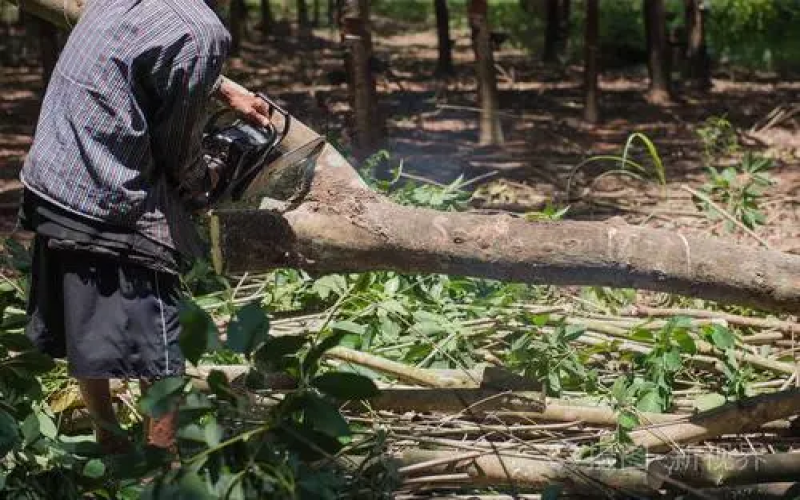
EU Deforestation Regulation Hits East Timor's Smallholder Coffee Farmers, Compliance Struggles May Trigger Global Market Supply Imbalance
The European Union's upcoming zero-deforestation regulation (EUDR), set to take effect in 2025, requires imports of seven categories of agricultural products, including coffee, to prove they are not linked to deforestation. This environmental milestone could, however, place a heavy burden on smallholder countries that depend on coffee exports. Take East Timor as an example: coffee accounts for more than 90% of its non-oil export earnings, sustaining the livelihoods of 77,000 rural households, and the EU is its largest market. Yet the complex local land tenure, scattered smallholder plots, lack of GPS mapping capacity, and high illiteracy rate make it difficult for the vast majority of coffee farmers to meet compliance requirements. This not only threatens East Timor's coffee industry but could also lead to non-compliant coffee flooding the global market, driving down prices and worsening the plight of smallholders. [more…]

JAB invests 2.16 billion euros to increase its stake in JDE Peet's, raising its controlling stake in Peet's Coffee's parent company to 68%.
Luxembourg-based private equity giant JAB Holding Company recently announced that it will acquire all of Mondelēz International's shares in JDE Peet's for €2.16 billion (approximately 16.7 billion RMB). Upon completion of the transaction, JAB's stake in JDE Peet's will surge to 68%, making it the largest controlling shareholder of this Peet's Coffee parent company. As a leading pure-play coffee and tea company globally, JDE Peet's owns brands such as Peet's Coffee and Pickwick Tea, and in 2020 set the record for Europe's fastest IPO in Amsterdam. Since entering China in 2017, Peet's Coffee has opened 225 stores, covering 12 provinces and municipalities. This transaction was called an important milestone by JAB's CEO, and the market reacted positively, with JDE Peet's stock price surging 16% that day. Front Street Coffee continues to follow global coffee industry developments, bringing in-depth analysis to enthusiasts. [more…]
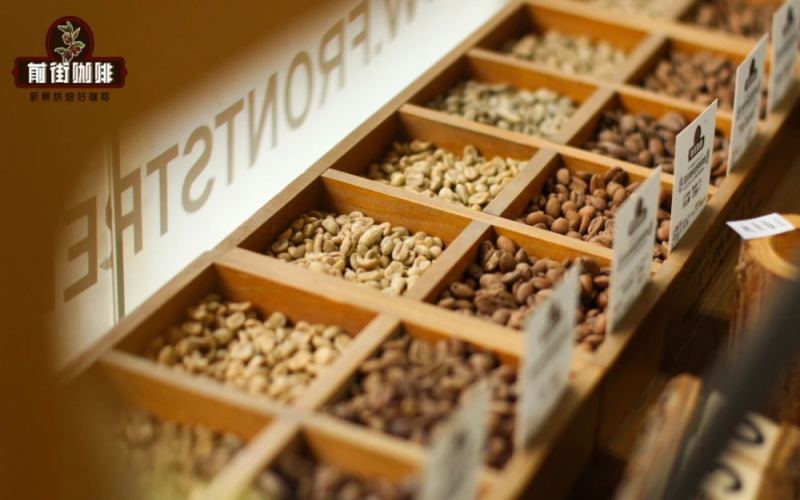
How to Choose the Roast Level for Yirgacheffe? Flavor Differences from Light to Medium Roast and Brewing Parameters Explained
Green coffee beans have almost no aroma on their own; only through roasting can they transform into the flavors in your cup. But roasting is not as simple as looking at the final color—choosing between fast and slow roasts, and between first and second crack, can make the same bean present completely different characteristics. This article, based on Front Street Coffee's roasting practices, systematically outlines the flavor trends of light, medium, and dark roasts, and focuses on Ethiopia's Yirgacheffe: what roast levels suit the washed and natural processing methods respectively? Why did Front Street Red Cherry Natural Yirgacheffe choose a light-medium roast? At the end, Front Street's recommended V60 three-pour brewing parameters and complete flavor description are included for coffee enthusiasts' reference. [more…]
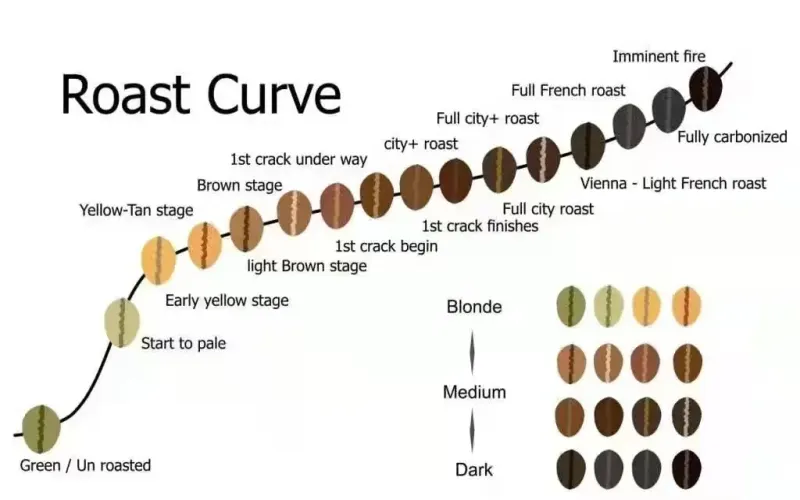
Practical Guide to Judging the Yellowing Point and First Crack in Coffee Roasting: Analyzing the Causes of Baked and Astringent Flavors
In the process of learning coffee roasting, there is often a gap between theoretical understanding and hands-on practice. This article focuses on judging two key milestones—the yellowing point and first crack—analyzing one by one the visual and auditory misjudgments that beginners easily make. It also offers temperature and aroma as auxiliary indicators for the yellowing point, and explains how misjudging first crack can lead to grassy, underdeveloped flavors and astringency in coffee. Drawing on Front Street's roasting course philosophy, the article also reminds readers not to mechanically copy curve data, but to understand the logic behind the data, so as to find a roasting path that truly suits them. [more…]
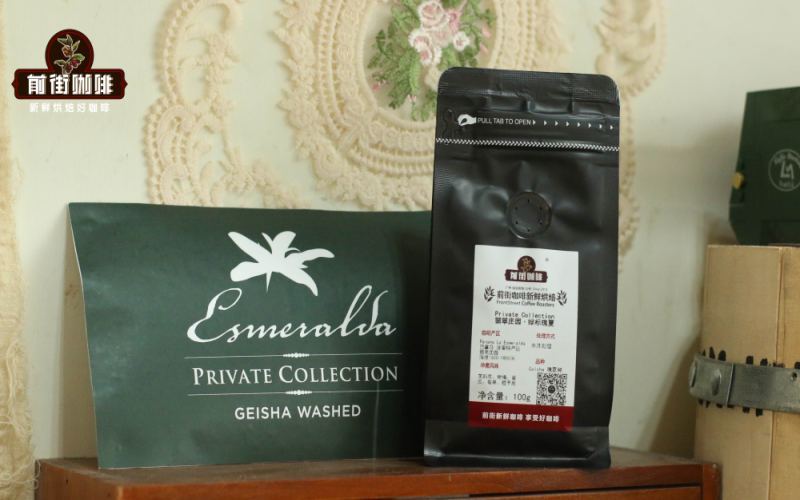
Front Street Emerald Estate Red Label Geisha Roasting Guide: How to Release Tea Notes and Floral Aromas Through Profile Control
Geisha coffee from Panama's Emerald Estate has always been renowned for its refined floral aroma and tea-like character, and Front Street Coffee's Emerald Red Label Geisha is a higher-tier representative among them. To preserve and highlight these signature flavor characteristics as much as possible during roasting, precise control is needed over the charge temperature, heat intensity, airflow damper, and key milestones such as dehydration and first crack. This article will break down the roasting process of Front Street Coffee's Emerald Red Label Geisha in detail, from charging at a drum temperature of 150°C to dropping at 189.5°C, explaining the adjustment logic at each stage step by step, and providing a complete description of the dry aroma, wet aroma, and palate flavors, to help coffee enthusiasts understand how to fully release the tea-like character and floral notes through the roasting curve. [more…]
Tracing the Invention of the French Press and a Standard Immersion Brewing Guide: From 19th-Century Patents to Modern Brewing
The French press may seem simple, yet it has a tortuous history spanning three centuries. As early as 1852, a joint patent titled "Piston-Filter Coffee Device" had already sketched out its prototype; it was not until the 1930s, after a Milan company improved the design and registered a patent, that the French press gradually entered the public eye. It was once widely criticized for "coffee like mud," and was even misread by dictionaries as an exercise for biceps. Today, the French press has become a brewing tool highly praised by coffee enthusiasts worldwide. This article will comprehensively trace the invention timeline of the French press, key figures, and improvement milestones, and include standard immersion brewing instructions, while also retaining relevant product recommendations from the Front Street brand for readers' reference. [more…]
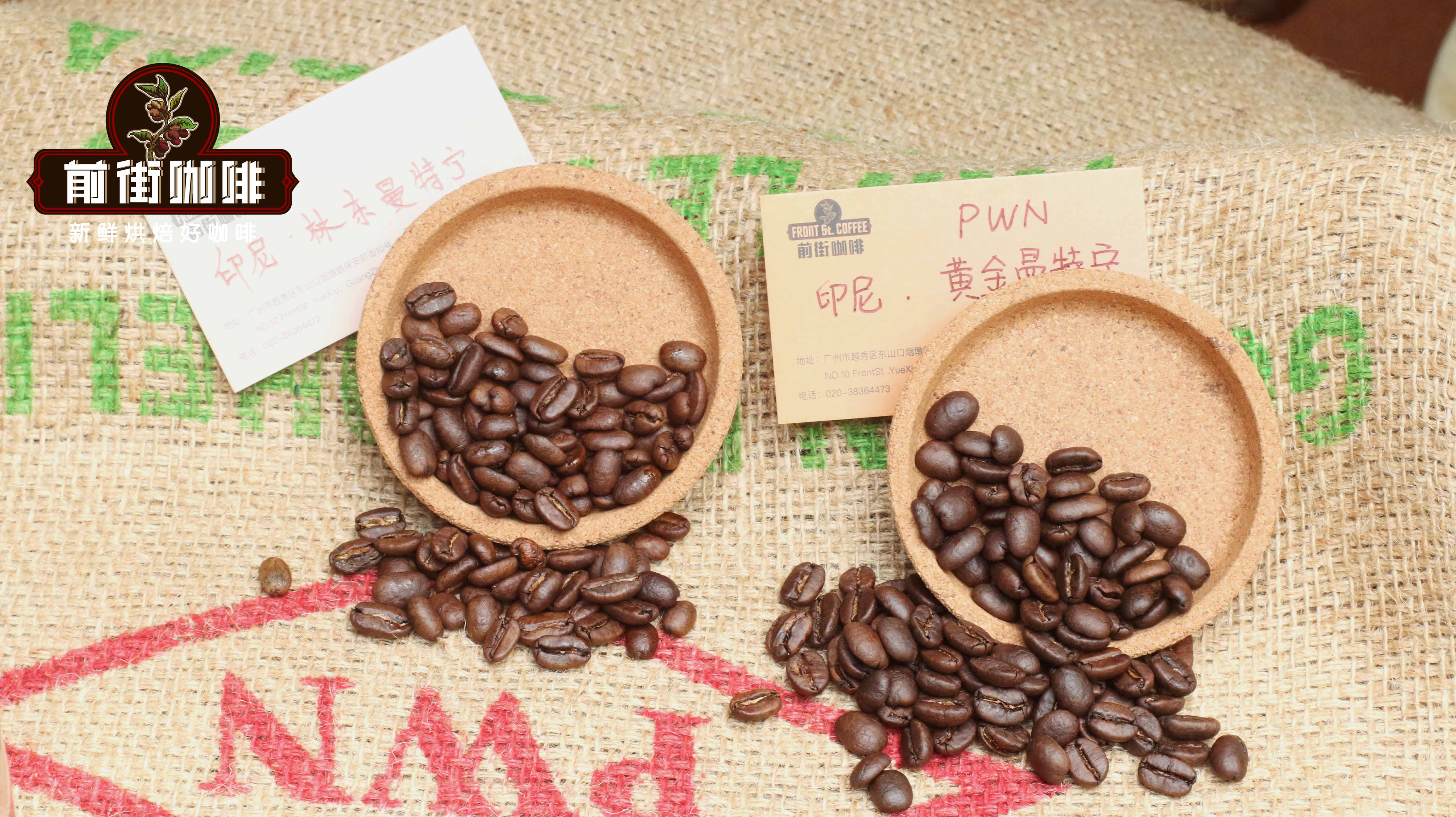
How to Make Deep-Roasted Coffee Smooth and Easy to Drink? A Full Analysis of Flavor Changes at Each Roasting Stage
The roasting duration of coffee beans directly determines the flavor direction in the cup—the longer the roast, the lower the acidity and the less caffeine remains. From extremely light roast to heavy roast, each stage has a completely different aroma and mouthfeel profile, and the brewing equipment that suits it also varies. This article systematically sorts out the flavor characteristics and recommended uses of light roast, medium roast, medium-dark roast, City roast, dark roast, French roast, and Italian heavy roast, and explains the appearance, temperature milestones, and common types of dark-roasted beans. The article also combines several representative beans from the Front Street brand to give specific suggestions for different scenarios such as pour-over, espresso, and moka pot, helping you find a dark roast coffee that suits your taste. [more…]
The Origin and Spread of Coffee: A Historical Journey from the Ethiopian Highlands to European Coffeehouses
The exact origin of coffee still has no definitive conclusion. The most widely circulated account points to the highlands of Kaffa Province in southwestern Ethiopia—where a shepherd noticed that his flock became unusually lively after eating a certain plant. Others believe it was only after a wildfire burned down a coffee forest that the roasted aroma drew people's attention. From initially chewing the fruit for stimulation and mixing ground coffee into flour to make "warrior bread," to boiling it in water as a beverage around 1000 AD, coffee has traveled a long road. In the 13th century, it spread with Ethiopian troops into Yemen and entered the Arab world, then passed through Turkey into Europe, and eventually was cultivated on a large scale in South America. After prices fell, it became a daily drink for Europeans. This article sorts out the key milestones in coffee's journey from its place of origin to global dissemination, helping coffee lovers understand the historical context behind this cup. [more…]
What Are Honey-Processed Coffee Beans? A Full Analysis of Costa Rican Honey-Processed Flavor and Mouthfeel Characteristics
Honey processing is a green bean processing method that falls between natural and washed processing, and is widely used in producing regions such as Costa Rica, Panama, and Guatemala. It retains the cleanliness of washed coffee while giving the beans a more prominent sweetness and caramel tones through fermentation of the residual mucilage layer. Depending on the degree of washing and drying time, honey processing is further divided into four levels: white honey, yellow honey, red honey, and black honey, with the differences in color corresponding to different flavor profiles. This article will introduce the definition, principles, and classification of honey processing, as well as the flavor and taste characteristics of Costa Rican honey-processed coffee, giving you a comprehensive understanding of this sticky, honey-like processing method, along with relevant recommendations from Front Street Coffee. [more…]
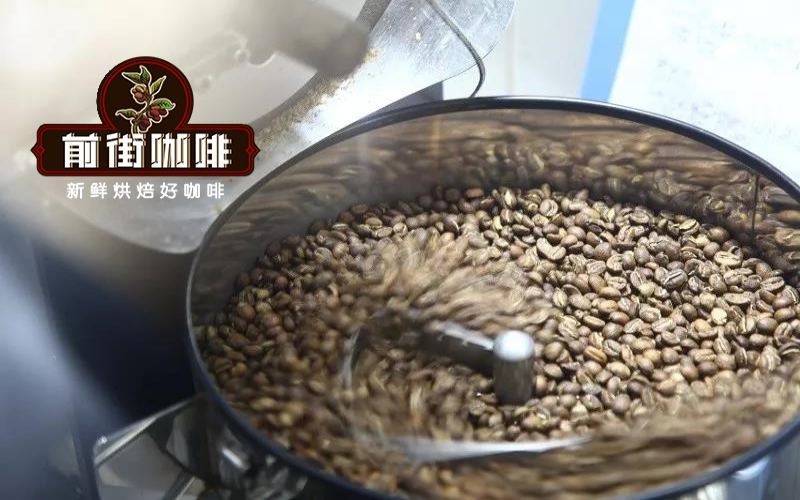
An Analysis of the Flavor Differences Between Light, Medium, and Dark Roasted Coffee Beans: Medium Roast Flavor Characteristics and Bean Selection Strategies for a Cup That Is Neither Sour Nor Bitter
The roast level of coffee beans directly influences the flavor direction in the cup. The darker the roast, the more the acidic compounds are destroyed, and caramel, smoky, and bitter notes gradually take over; the lighter the roast, the easier it is to preserve bright fruit acidity and floral aromas. For coffee lovers who neither like too much acidity nor want to taste bitterness, a medium roast is often the more balanced choice. So what flavor characteristics does medium-roast coffee actually have? And how do you distinguish between medium-light and medium-dark roasts? This article starts from the principles of roasting, combines them with the first crack milestone, sorts out the flavor differences among light, medium, and dark roasts, and offers specific Front Street Coffee bean recommendations to help you find the cup that suits you between acidity and bitterness. [more…]
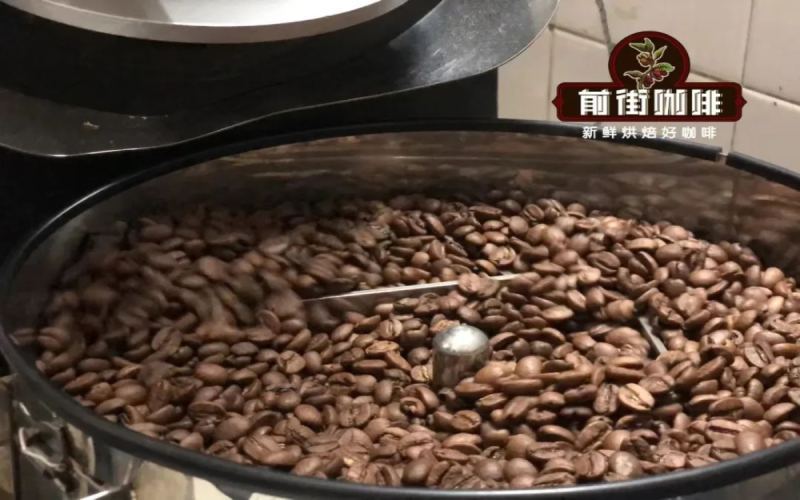
A Complete Guide to Coffee Roast Levels: First Crack, the Eight-Level Agtron Color Classification, and What Roasting Percentage Really Means
What degree of coffee roasting is considered appropriate? Starting from the key milestone of first crack, this article systematically sorts out the logic for determining coffee bean roast level, and with the help of Agtron color values, divides roast degree into eight levels: light, cinnamon, medium, deep, city, full city, French, and Italian, explaining one by one the timing for dropping each level and its flavor direction. At the same time, it answers the correspondence between the Roasting percentage markings commonly used by roasters and Agtron color values, helping coffee enthusiasts quickly understand the roasting information on packaging. The article also includes Front Street Coffee's specialty bean recommendation channel for further communication and purchasing. [more…]

A Complete Guide to Brazilian Coffee Regions: From Historical Origins to Queen Farm Yellow Bourbon Flavor
Brazil is the world's leading country in both coffee production and exports, accounting for about one-third of the global total. However, coffee is not native to Brazil. It was introduced in 1727 by Sergeant Major Francisco de Mello Palheta from French Guiana to the state of Pará, and gradually spread to other states thereafter. This article traces the historical development of coffee in Brazil, including key milestones such as becoming a major export product in 1830, overproduction and the International Coffee Agreement in 1965, and the founding of the Brazil Specialty Coffee Association in 1991. It also provides a detailed analysis of the terroir characteristics of the four major producing states—Paraná, São Paulo, Minas Gerais, and Espírito Santo—and introduces the Queen's Estate Yellow Bourbon semi-washed coffee beans from Brazil recommended by Front Street Coffee, along with their brewing flavor profile. [more…]

Shanghai's first day of full recovery: coffee shops reopen, scenes of people lining up to buy coffee return to the streets
On June 1, Shanghai reached an important milestone in fully restoring normal production and daily life. After more than two months of home quarantine, coffee lovers finally smelled the aroma of coffee wafting through the streets and alleys once again. From chain brands to independent shops, coffee stores reopened one after another, with takeout and self-pickup orders surging—some shop owners even sold over a hundred cups of coffee to passersby while the shutter was only half open as they were adjusting equipment. This article documents the real scenes of the coffee industry's recovery before and after Shanghai's lockdown was lifted, and citizens' eager anticipation for a freshly ground cup of coffee. [more…]